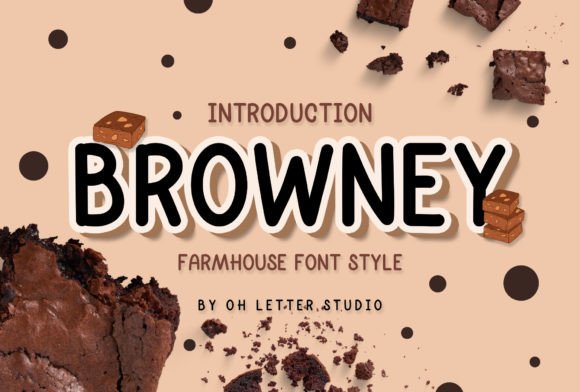
Browney: A Sweet Font for Digital Branding and Web Design
While working on a boutique online store redesign, I was tasked with creating a brand identity that felt both inviting and professional. The client wanted to convey warmth, approachability, and a touch of whimsy—something that would resonate with their target audience of young food lovers and snack enthusiasts. After exploring several typefaces, I settled on Browney, a font that immediately captured the right balance of sweetness and sophistication.
Browney for Snack Packaging and Online Store Headers
One of the first places I tested Browney was in the header section of the homepage. Its bold, cute, and striking style made it perfect for a hero title that needed to grab attention without overwhelming the user. The font’s neat structure ensured readability even at smaller sizes, which is crucial for mobile users browsing on-the-go. I paired it with a clean sans-serif body font to maintain visual hierarchy and ensure the content remained scannable.
I also used Browney for product titles and promotional banners, especially those featuring snack items like chocolate bars or fruit snacks. The font’s association with sweetness and deliciousness aligned perfectly with the brand’s message. It added a playful yet polished feel to the design, making the online store feel more personal and less corporate.
Browney for Branding and Logo Design
When designing the logo for the boutique, Browney became a key element in expressing the brand’s personality. Its cute and striking characteristics helped create a memorable visual identity that stood out in a crowded market. I experimented with different weights and styles to find the perfect balance between boldness and elegance, ensuring the logo would work across various platforms—from social media profiles to physical packaging.
The font’s versatility allowed it to be used not only in the main logo but also in secondary branding elements like taglines, call-to-action buttons, and social media handles. This consistency reinforced the brand’s voice and made the overall design feel cohesive and intentional.
Browney for Blog Headers and Content Layouts
Later in the project, I considered how Browney could be applied to blog content. While it’s primarily a display font, I found that using it sparingly in headers and subheadings added visual interest without sacrificing readability. For example, I used it in the title of a blog post about healthy snack ideas, where its sweet and friendly tone complemented the content perfectly.
To maintain clarity, I paired Browney with a more neutral body font, ensuring that the text remained easy to read on both light and dark backgrounds. I also paid close attention to spacing and line height, adjusting them to optimize the font’s performance on mobile devices and responsive layouts.
Browney for Campaign Landing Pages and Social Media Graphics
As part of a seasonal campaign, I created a landing page that showcased limited-edition snack products. Browney played a central role in the design, used for headline text, promotional banners, and button labels. Its bold and cute nature made it ideal for capturing attention quickly, while its readability ensured that users could easily navigate through the page and take action.
For social media graphics, I used Browney as a decorative accent, often pairing it with a simple sans-serif font for body text. This contrast helped highlight key messages while keeping the design visually balanced. I also experimented with different color combinations to see how the font performed against various background images, ensuring it remained legible in all contexts.
Browney for Digital Brand Kits and Web Templates
When building a digital brand kit for the client, Browney was included as a core typography asset. I provided examples of how it could be used in different scenarios, such as logo design, website headers, and social media assets. I also highlighted the importance of checking webfont availability, file formats, and licensing terms before using the font in live projects.
Additionally, I recommended pairing Browney with other fonts to create a more dynamic typographic palette. For instance, combining it with a serif font for a more editorial look or using it alongside a modern sans-serif font for a contemporary feel. These pairings helped expand the font’s versatility and ensured it could be adapted to a wide range of design needs.
Browney for Mobile-First Design and Responsive Layouts
Considering the increasing importance of mobile-first design, I made sure to test Browney on various screen sizes. On smaller devices, I adjusted the font size and spacing to ensure optimal readability. I also checked how the font performed on dark mode backgrounds, making sure it remained visible and legible in all environments.
By prioritizing readability and responsiveness, I was able to use Browney effectively across the entire website, from desktop views to mobile screens. This attention to detail helped create a seamless user experience that aligned with the brand’s goals and values.